Register today!
Where science meets practice
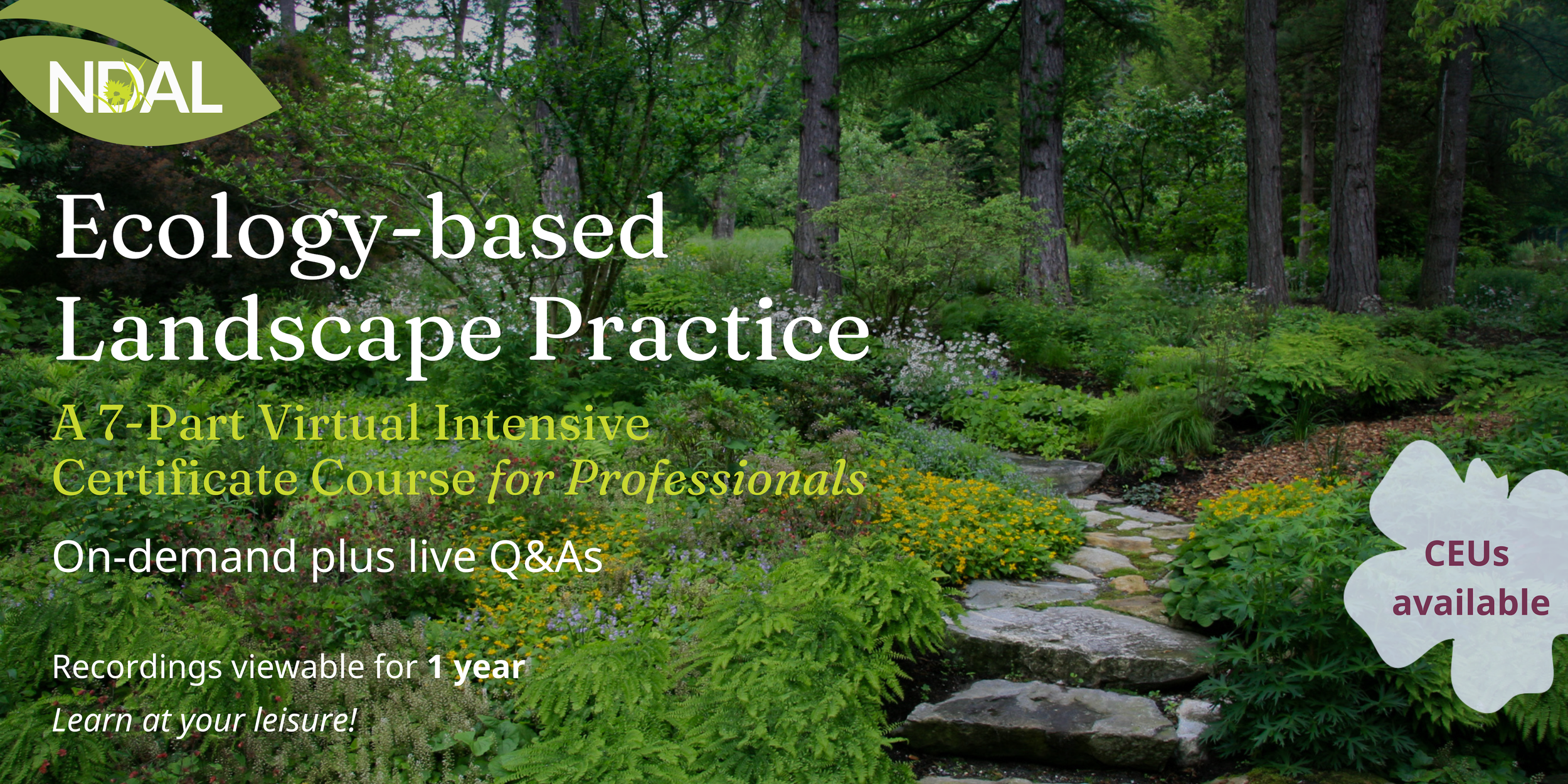
Join Landscape Designer Larry Weaner and native plant expert Ian Caton on a deep dive into the integration of restoration ecology and garden design. From technical instruction to personal anecdotes in this on-demand virtual course, Larry and Ian share over 70 years of combined experience on the fine points of designing, planting, and managing ecology-based landscapes.
Geared toward landscape practitioners including but not limited to landscape designers, landscape architects, restoration professionals, and horticulturists in the Eastern & Midwestern U.S.
What’s included:
1) Access to all seven on-demand recordings from NDAL's 2025 live Ecology-based Landscape Practice Intensive—including participant questions and real-world discussions
2) Participate in four live Conversation and Q&A sessions with instructors and peers

3) NDAL’s 100+ page Ecology-based Landscape Practice Course Manual (digital) including an ecology-based plant characteristics chart, equipment recommendations, wildlife habitat enhancement strategies, diagrams for planting and maintenance procedures, and more
4) NDAL Ecology-based Landscape Practitioner Certificate (Bundle only, details below)
5) Continuing education credits (CEUs) (details below)
6) Community Forum to communicate with peers
7) Additional course materials including note-taking handouts and recommended resources
This course is accessible for 1 year from your registration date
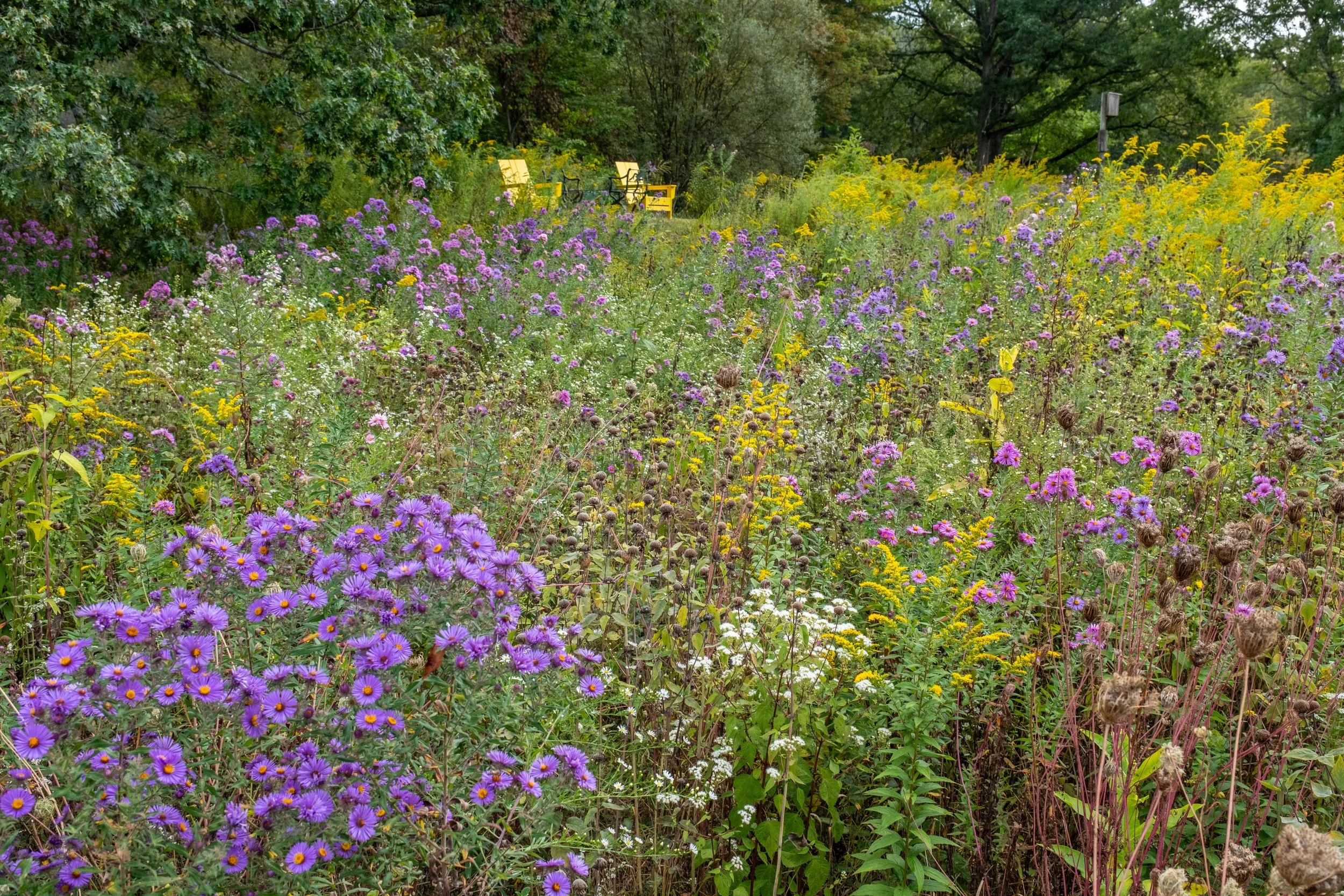
Photo by Mark Weaner
Included in the Full Bundle:
NEWLY OFFERED! NDAL Ecology-based Landscape Practitioner Certificate
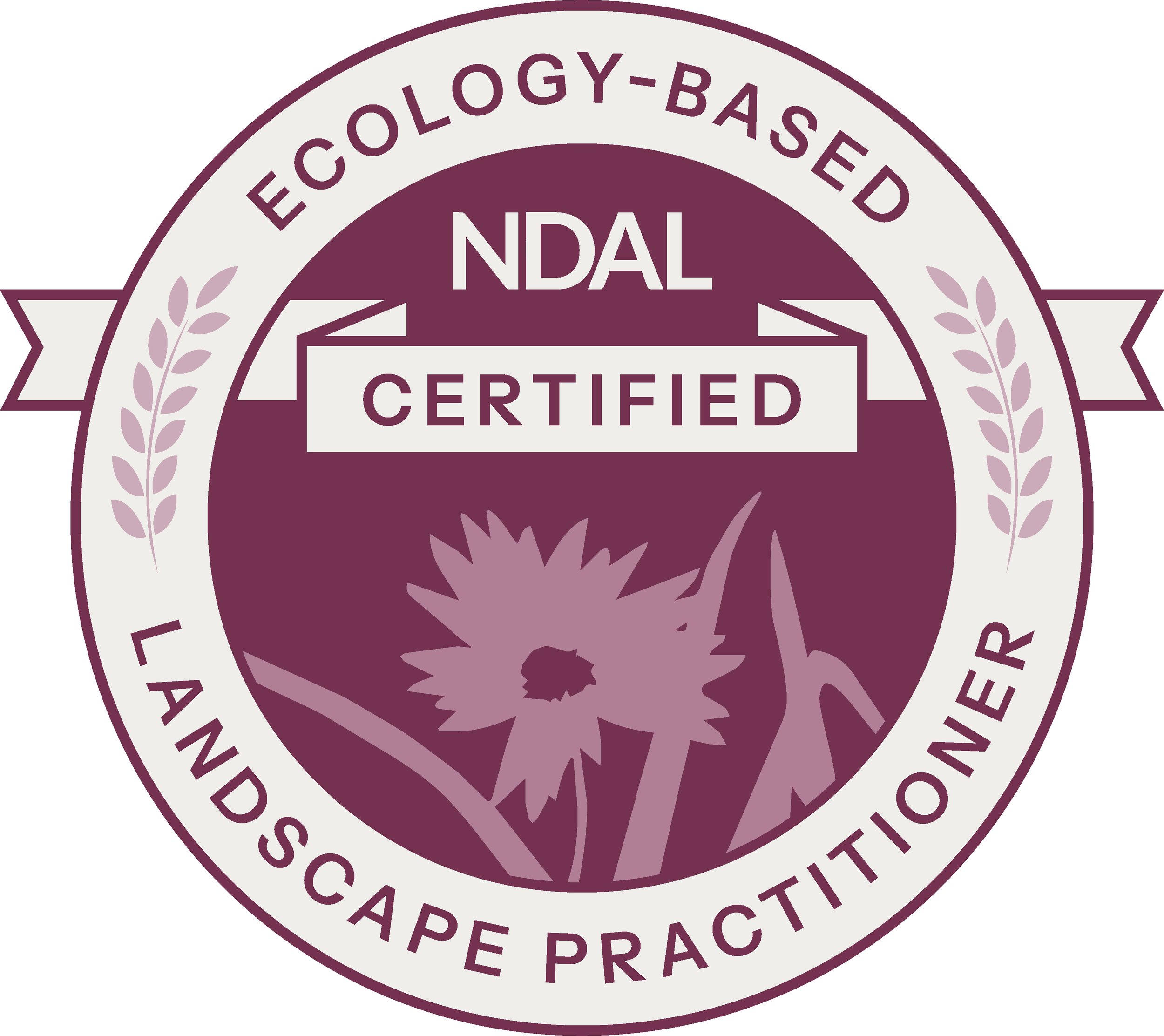
Upon completion of the course (Full Bundle only), you will receive a certificate issued by NDAL that indicates your newly-deepened knowledge in ecological landscape design & practice. Display it on your LinkedIn page, resume, and/or on your company’s website.
If you’ve previously taken this course, you are qualified as an NDAL Ecology-based Landscape Practitioner!
Please email info@ndal.org to receive your certificate and continue participating in this growing yet diverse community.
Register today!
Full Bundle (Sessions 1-7) - $695
or individual sessions - $145 each
Scroll down for session details
CEUs available:
Student scholarships & discounts available:

21 class hours (LA CES) plus four 2-hour Conversation and Q&A sessions (29 hrs - APLD, NOFA, SER)
As of 2026, NDAL is thrilled to share that 27 - and counting! - students/emerging professionals have received scholarships to our Intensive.
Discounts: Wild Ones, AOLCP (CT NOFA)
Scroll down for session, registration, scholarship, and discount details
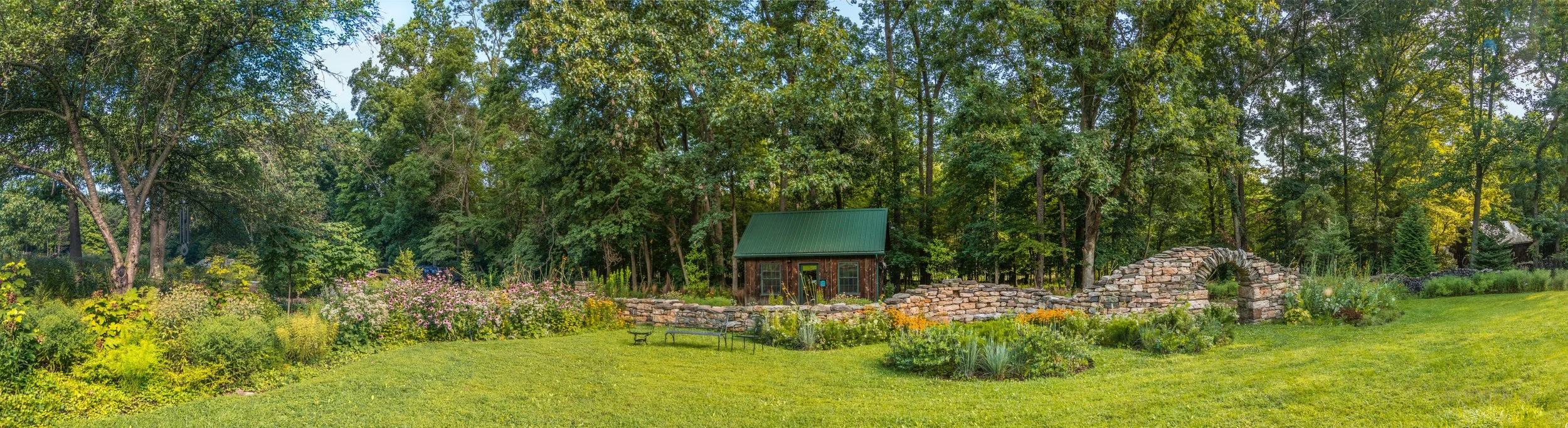
“You have made a great contribution to the field through your conferences.”
– Leslie Sauer, Andropogon Associates, Philadelphia, PA
The Bower (Shermans Dale, PA)
Photo by Mark Weaner
On-Demand Sessions:
Recordings viewable for 1 year after registering
Register for the Full Bundle or individual sessions
Session 1*
Foundational Ecological Principles
Larry Weaner, FAPLD
*Recommended prerequisite for all other Sessions
Our opening presentation will examine the species traits, vegetative patterns, and ecological processes found in spontaneous plant communities. The patterns and processes explored will include disturbance, succession, competition, and relative ecological stability. This session will serve as the theoretical basis for the practical design, planting, and management procedures detailed in all subsequent sessions.
Session 2*
Ecology-based Design
Larry Weaner, FAPLD
*Recommended prerequisite for all other Sessions
Larry will expand upon the ecological principles described in Session 1 by illustrating them in the context of landscape plans, planting protocols, and management procedures. He will also describe often-neglected plant characteristics that are crucial to ecology-based practice. These will include habitat fidelity, colonization patterns, seasonal growth period, life spans, spatial and temporal niche, and proliferation strategies.
Session 3
The Open Landscape:
Meadows, Old Fields & Shrublands
Larry Weaner, FAPLD
Wildflower meadows and native grasslands are in high demand, but effective protocols for successfully achieving them are in short supply. Here we will delve into the nitty gritty of meadow design: site analysis, species selection, seed mix formulation, live plant inclusion, planting and management. The inclusion of shrub thickets and drifts will also be covered, including the arrangement of clonal vs. clump forming species, and the use of shrublands as ecological and visual “connective tissue” between meadow and woods.
Session 4
Plants of the Open Landscape:
Meadows, Old Fields & Shrublands
Ian Caton
In this session, native plant authority Ian Caton will examine plants of the open landscape that exemplify the ecological characteristics described by Larry Weaner in previous sessions. His presentation will span the successional period from herbaceous meadow, to mixed woody/ herbaceous old field, to the ecologically important but often neglected clonal shrub thicket. He will also present a group of “workhorse” native species for the sunlit landscape that combine reliability and weed suppression with attractive aesthetic character.
Session 5
The Canopied Landscape:
Woodlands, Edges & Hedgerows
Larry Weaner, FAPLD
An ecology-based approach to woodland design is more like guiding a vegetative process than implementing a static planting plan. Guided succession can foster the orderly transformation from an open field to a multi-tiered forest through planting, managed natural recruitment, or a combination of the two. Under existing canopy, where few herbaceous species can be established through direct seeding, we will discuss the planting of small “seed source colonies,” and management strategies to encourage their proliferation into the larger landscape. Management techniques that are unique to woodlands including selective height cutting, sunlight manipulation, and assisted seed dispersal, will also be described in detail.
Session 6
Plants of the Canopied Landscape:
Woodlands, Edges & Hedgerows
Ian Caton
In this session, native plant authority Ian Caton will examine plants of the canopied landscape that exemplify the ecological characteristics described by Larry Weaner in previous sessions. His presentation will include plants found at all of the woodland’s vertical layers, from canopy to understory. He will also discuss their specific abilities to integrate with the unique colonization strategies inherent in woodland development and enhancement. Finally, Ian will present a group of “workhorse” native species for the woodland, including those that combine reliability with desirable aesthetic characteristics.
Session 7
The Artistic Overlay:
Making “Wild” Legible
Larry Weaner, FAPLD
Ecological design need not be a bitter aesthetic pill that our clients must swallow to do the right thing. The order inherent in our wild native landscapes is widely considered beautiful. By translating that ecology-based order into the aesthetically-based language of fine garden design, the results can be much more universally embraced by our clients. In addition, Larry will illustrate how highly gardenesque - and even formal - elements can gracefully interact and intermingle with wilder woodland, shrubland, and meadow compositions. This approach can result in landscapes that are both ecologically productive and visually pleasing to clients with a variety of aesthetic preferences.
INCLUDED FOR ALL REGISTRANTS:
Four Live Conversation and Q&A Sessions with the instructors
Larry Weaner & Ian Caton
No matter which of the 7 on-demand sessions you’ve watched, all participants are welcome to join these conversation-style sessions which are entirely devoted to questions and comments.
All sessions will be recorded and viewable after the live dates.
Upcoming Live Q&A Session Dates:
Tuesday, September 22, 2026 | 2:00 - 4:00 PM ET
Tuesday, December 1, 2026 | 2:00 - 4:00 PM ET
Tuesday, March 2, 2027 | 2:00 - 4:00 PM ET
Tuesday, June 1, 2027 | 2:00 - 4:00 PM ET
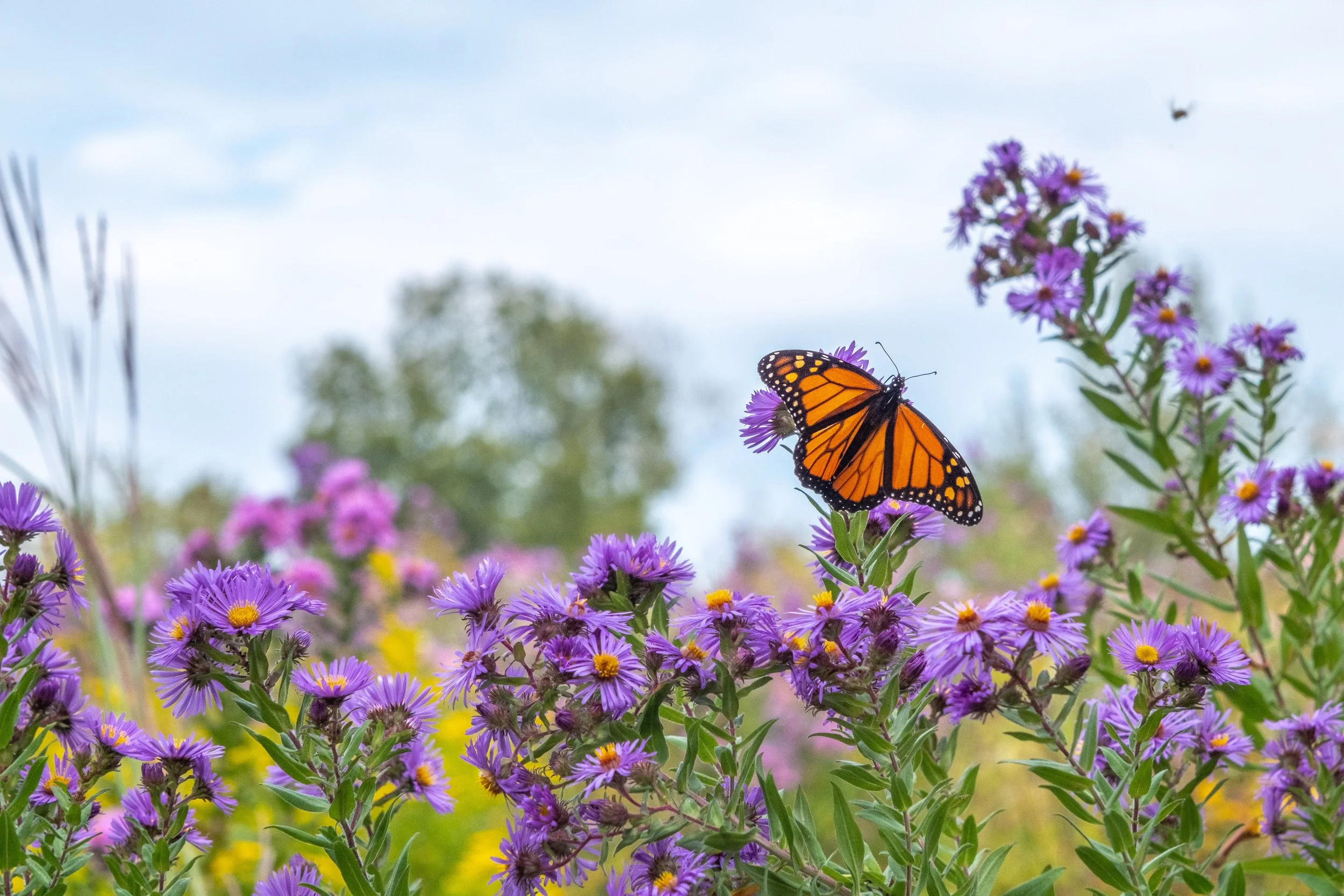
Photo by Mark Weaner
Instructor Bios
-
Ian Caton is the founding principal of Wood Thrush Native Nursery in Floyd, VA. He worked for Larry Weaner Landscape Associates from 2001 to 2013, and now serves as a project consultant for the firm. His knowledge of native plants and their characteristics is encyclopedic. Ian has designed and installed landscapes for a wide range of residential, commercial, and public settings. Prior speaking engagements include the Irvine Native Plant Symposium and events at the New York Botanical Garden and Bowman’s Hill Wildflower Preserve.
-
Larry Weaner, FAPLD, founder of Larry Weaner Landscape Associates (LWLA), established New Directions in the American Landscape in 1990. He is nationally recognized for combining expertise in horticulture, landscape design, and ecological restoration. His design and restoration work spans more than twenty U.S. states and the UK, and has been profiled in national publications, including The New York Times, The Wall Street Journal, Landscape Architecture Magazine, Garden Design, American Gardener, Wildflower Magazine, and ASLA’s “The Dirt” blog. Larry has presented at American Society of Landscape Architects (ASLA) annual and state chapter meetings, Association of Professional Landscape Designers (APLD) events, and many others. His book, Garden Revolution: How Our Landscapes Can Be a Source of Environmental Change (2016), co-authored with Tom Christopher, received an American Horticultural Society (AHS) Book Award in 2017. In 2021 he received the AHS Landscape Design Award and the APLD Award of Distinction.

Photo by Larry Weaner Landscape Associates
What past Intensive Course attendees are saying:
“Thank you for this 7 week course. It filled in so many gaps in my knowledge about ecological planting design. I think it’s such a great series for landscape architects who don’t often get much plant education in landscape architecture programs. I look forward to applying my new knowledge in my practice.”
“Totally fantastic! No other presentations come close to NDAL events in terms of quality and richness of information.”
“I cant believe how much I learned in the first class alone!”
“Larry is a one-of-a-kind expert in the field of natural gardening and ecological restoration in the U.S. Northeast. Never miss a chance to listen to him.”
“Ian was really well-spoken and incredibly knowledgeable!”
Registration Details
-
When registering on the NDAL Participants Portal you will be asked to either sign into your existing account or create one. This account will give you exclusive access to the session recordings and course materials. These materials will be available until 1 year after you register.
Group Orders: To register multiple people/staff members at once, go to your chosen course, click Register, then enter the number of registrations needed under Quantity on the left side. You will receive an email with an invite link to send to all the registrants in your group. **Please note if you are registering yourself as well, you will not be automatically registered under a Group Order; you will also need to click the invite link to redeem your registration.**
Gift Orders: To purchase a course as a gift for someone else, go to your chosen course, click Register, then check off “This is a gift.”
Students please email verification of student status (ie. course schedule, student ID) to info@ndal.org for student discount code.
-
Students and recent graduates are invited to apply for scholarships granting free registration to the Intensive Course. Ten scholarships will be awarded.
Eligibility: Current undergraduate/graduate student or matriculation in 2026/2027.
To apply: Please submit no more than 1 page description of why you’re interested in this program, and your resume.
Due date: Applications taken on a rolling basis until filled.
To apply: Please email your letter and resume to NDAL Administrative Associate Alyssa Prevost at info@ndal.org.
-
For a student discount, please email your verification of student status to info@ndal.org and we will send a discount code.
-
If you’ve already emailed for Wild Ones Member discount codes in the past, please keep an eye out for an email with the new code, as we are sending it to anyone who has previously used a Wild Ones-NDAL discount code.
If you haven’t used a code previously, please email info@ndal.org with your Wild Ones member ID # or other verification of membership for the program discount code.
-
Accredited Organic Land Care Professionals of The Northeast Organic Farming Association of Connecticut receive a 10% discount on this course. Please look out for the discount code from NOFA, or contact Jennifer Shaffer, NOFA Organic Land Care’s Program Director at jennifer@ctnofa.org for the code.


-
Yes, please see the CEU details at the top of this page.
FAQs
Questions? Please contact:
New Directions in the American Landscape
info@ndal.org
510-518-0430
NDAL reserves the right to request removal of this course certificate/badge from a website/resume if it's used in a misleading way.